Having just returned from an incredible 50 mile rafting adventure down the remote Lower Owyhee in Eastern Oregon, I was eager to check out the GoPro footage from some of the more notable rapids. Below are a few brief edits I put together.
Amazing canyon experience paddling through this section of the river.
Photos coming soon …
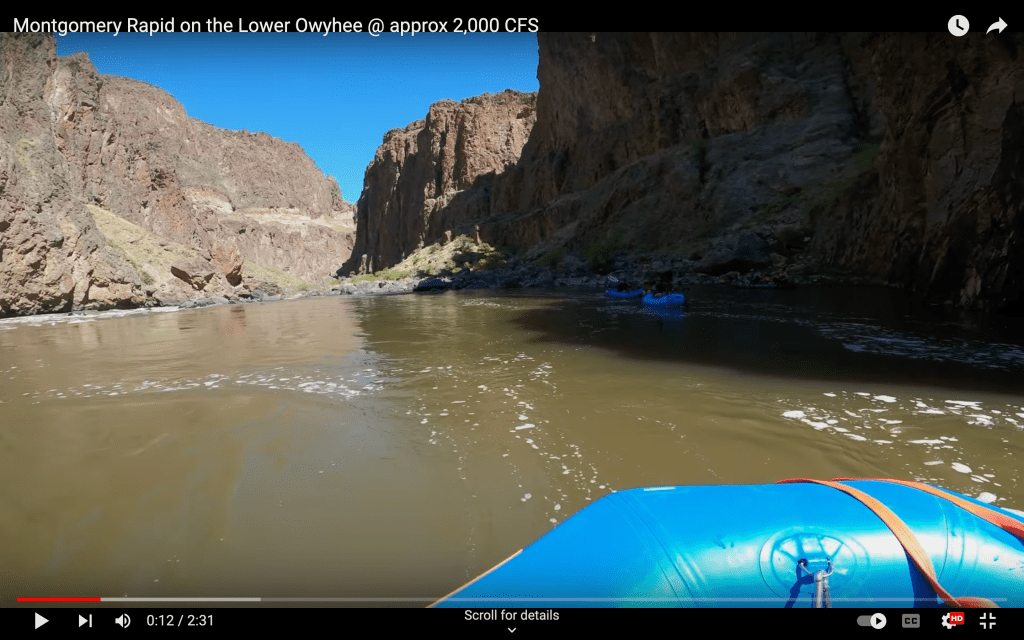
At low flows Montgomery Rapid (Class III+) is often considered the most challenging rapid on the Lower Owyhee, but at higher flows far less rocks are exposed, making it a less technical move. Our group (one raft, three packrafts) found it straightforward at approximately 2,000 CFS.
I spent the vast majority of our 50 mile Lower Owyhee trip onboard the raft, but I did get to briefly experience being in one of the packrafts and thoroughly enjoyed it. This also happened to be during the only inadvertent swim of the float in a small rapid called Tanager.
At the flows we ran the Lower Owyhee (approx 2,000 cfs), Whistling Bird was the most the most technical rapid we encountered from Rome to Birch Creek. The water was high enough where there was a significant amount of force pushing the boat into the undercut rock feature (river right), but low enough were the majority of the rocks to the left were just barely exposed.
We scouted river left and watched another group navigate the rapid. The first raft bounced and spun off a rock, then recovered. The second raft took a line closer to the undercut rock feature and got through smoothly.
On the approach, our raft made contact with a rock that was hiding just beneath the surface and jolted the boat for a brief moment, but then we pushed through and had no issues. The two other packrafts in our group navigated the rapid fairly easily, but the two man packraft got pushed into the rock feature at the last moment and then immediately recovered.
Bulls Eye Rapid is another example of a rapid on the Lower Oywhee that is more technical and challenging at lower flows. It is also the first major rapid on the lower section of the river. However, at 2,000 cfs we found it very straightforward and the large rock at the bottom that has been known to pose a hazard to rafts was easily avoidable.
 David N. Braun Photography
Leave a comment