While the coastal areas are too wet for rattlesnakes and the mountains above 6,000 ft too harsh, Oregon does have two subspecies of the Western Rattlesnake (Crotalus viridis).
The Northern Pacific Rattlesnake (Crotalus viridis oreganus) can be found from the Klamath/Siskiyou Mountains to the Northeastern corner of the state and is often relatively small, green or brown. It is also a broadly tolerant species, occupying a range of environments.
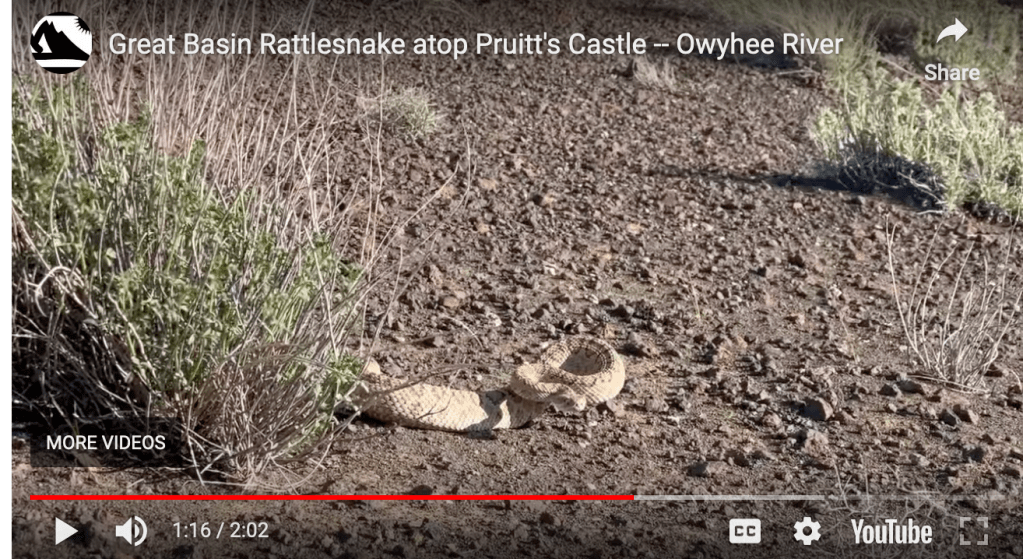
The Great Basin Rattlesnake (Crotalus oreganus lutosus), another subspecies of the Western Rattlesnake, inhabits the drier southeastern region of the state, is larger, and tends to be a tan color to blend in with its desert environment.
On all three Central/Eastern Oregon rafting trips our group has had an encounter with a rattlesnake. Two were actually close calls. In one the snake was not seen initially in tall vegetation and in the other it blended in with rocks and it was the rattle that alerted the hiker in our group. In all three the rattlesnake did everything possible to avoid confrontation.
Rattlesnakes aren’t seeking humans out to attack them, but for obvious reasons you also don’t want to step on one in a remote canyon that would take days to get out of. I’ve always been weary of rattlesnakes and continue to be, but these experiences have shown me that rattlesnakes will generally try their best to avoid conflict with you. The same has been true for the rattlesnakes I’ve encountered in Northern California. But, they also blend in with their environment well, so when you are in their habitat it’s important to be mindful of where your hands and feet are, wear boots, avoid tall vegetation, and look for them in and around rocky areas.
While I was shooting the incredible geologic features around Pruitt’s Castle in the Owyhee River Canyon the rest of the pack raft crew hiked to the top. One member of the group stumbled upon this large Great Basin Rattlesnake, then took this phone footage. The snake quickly made itself known and moved in the opposite direction.
Just prior to this footage being taken, I retreated from what I think may have been a rattlesnake den on my off trail hike, but it was hard to identify the snakes in the shade and they retreated to holes in the volcanic rocks almost instantly.
The second video, taken in the John Day River Canyon, shows the Northern Pacific Rattlesnake on the bank of the river near our camp. Initially my friend did not see the snake, which blended in well with the environment. Fortunately, he was warned by the rattle before he got too close. After taking a number of steps back and retreating to a safe distance he took this short video of the snake coiled up.
The sun was out on this spring afternoon and it was warm, but not hot. These are ideal conditions for a rattlesnake encounter.
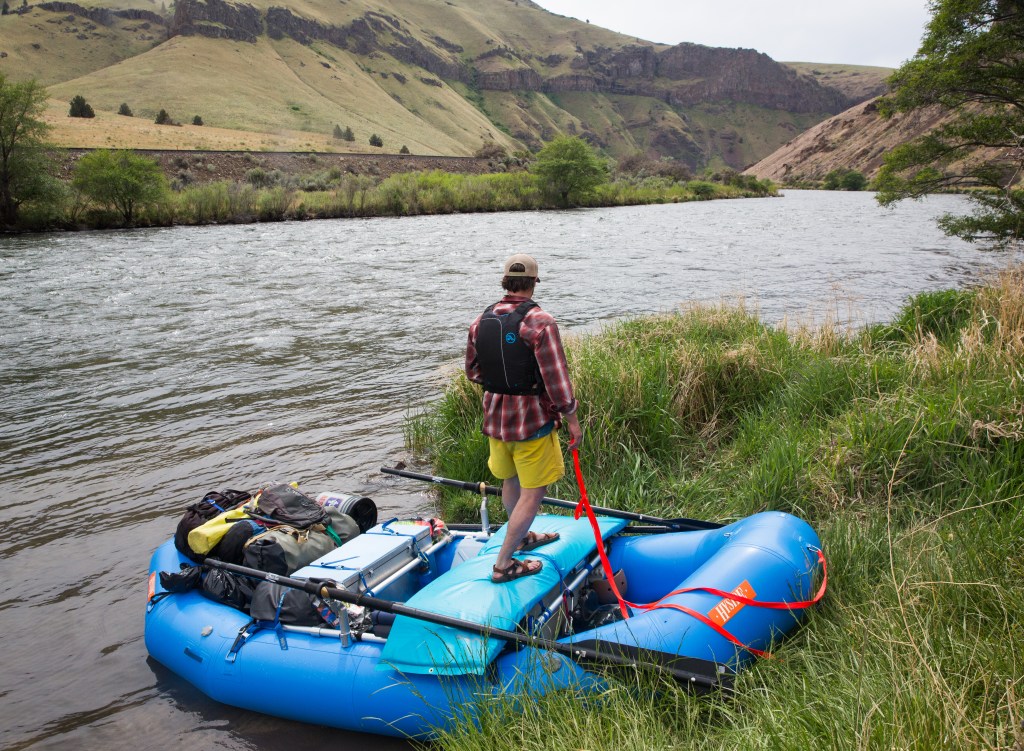
Our first Oregon river canyon encounter came on the Lower Deschutes where we jumped off the raft into a grassy area to pull the boat up and my friend realized he had almost stepped on one.
If you are spending a lot of time in Central/Eastern Oregon river canyons, you should probably expect to see the Western Rattlesnake at some point.
John Day River Trip Gallery: https://www.davidnbraun.com/index/G0000NuZaPsE7fHQ/thumbs
Cascadia Gallery: https://store.davidnbraun.com/cascadia-oregon-washington-landscape-photography
 David N. Braun Photography
Leave a comment